
The One Question Every Author Should Ask When Publishing Changes
You’ve done it; you have published your book and that goal is ticked off, or is it?. Your manuscript has been edited, the cover is looking great, the files have been uploaded and your book is published and available for people to buy. Then comes a question that can feel much harder than you expected:
How do I actually get my book into the hands of my readers?
This is a point where I see many authors become overwhelmed.
Publishing a book is something you can work towards. There are clear stages and milestones along the way. But once your book is out in the world, things can suddenly feel much less certain.
Where should your book be available? Which distribution channels should you use? Should you concentrate on Amazon? What about bookstores? Your website? Social media? How do people even discover your book amongst the millions already out there? And perhaps the biggest question of all:
How do I find my readers?
It can be very easy to reach this point and think, I don’t know what to do next. So, you stop. Not because you don’t believe in your book, or you don’t want people to read it. But because there are so many options available that doing nothing can suddenly feel easier than trying to work out which direction to take.
If that sounds familiar, I want you to start somewhere much simpler.
Go back to your ‘who’
When an author tells me they don’t know what to do next, one of the first things I ask is:
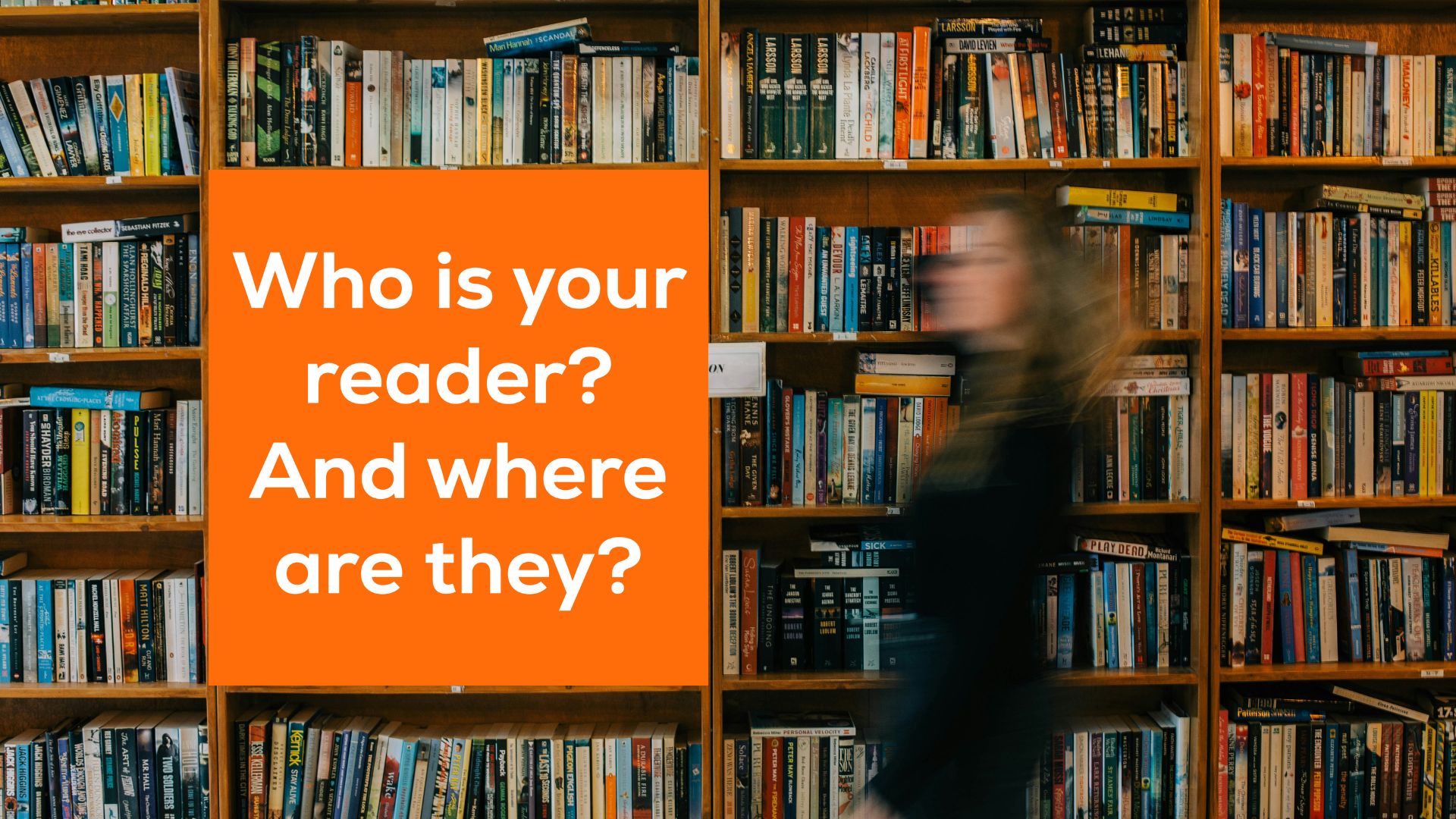
Who is your reader?
Who did you write this book for? Where are they spending their time? How are they searching for books like yours? What words or phrases might they be typing into Google, Amazon or other platforms?
Where are they buying books from? It might be Amazon, but don’t automatically assume that’s the only answer.
Perhaps your readers prefer to buy from an independent bookstore? Are there specialist retailers relevant to your subject? Do they want the option to buy directly from you? Are there organisations, events or communities where your ideal readers already gather?
Then think about how the reader discovers new authors. Social media can certainly play a role, but it doesn’t have to be your entire marketing strategy.
What podcasts are your readers listening to? What are they watching on YouTube? What newsletters do they subscribe to? Which organisations do they belong to? Where are they going for information, inspiration or entertainment? Sometimes, thinking outside the box is the best way forward.
Because making a book available and making a book discoverable are two very different things.
Distribution is changing too
One of life's certainties is the online world is constantly changing and this iswhy we continue to watch what is happening across the publishing industry.
Distribution isn’t necessarily a decision you make when you publish your book and never think about again. Platforms change, new opportunities emerge, costs change and technology updates. Two recent announcements are good examples.
IngramSpark has recently made its Share and Sell feature available in Australia. Authors can now create a shareable purchase link that takes readers directly to their book listing. There is also the option to create a QR code or add an HTML book image and order button to a website. Think about what that could mean beyond simply having another link.
An author speaking at an event could put a QR code on promotional material. Someone appearing on a podcast could give listeners an easy way to find their book. An author could share a direct purchase link through an email or social media post or make it easier for visitors to purchase from their website.
It potentially shortens the distance between someone discovering you and being able to buy your book.
Check out how the IngramSpark’s Share and Sell page will look for your readers here.
Sometimes a change means reviewing what you already have
At the same time, Draft2Digital has announced a different kind of change.
For the first time, it has introduced account activation and maintenance fees. New accounts now have a one-off US$20 activation fee, while an annual US$12 maintenance fee applies to accounts earning less than US$100 in net book-sale proceeds through Draft2Digital over the preceding 12 months. Authors earning US$100 or more during that period are not charged the maintenance fee.
Does that mean everyone should suddenly stop using Draft2Digital? No, I don’t believe so. But it does give us another reason to ask a useful question:
Is the distribution strategy you chose when you published still the right strategy for your book today?
The answer will be different for every author and that’s the point.
You don’t need to chase every change
If the last few years have taught us anything, it’s that the publishing and online landscapes are not going to stand still.
Technology continues to change rapidly, and AI is accelerating that change even further. The way people search for information, discover content, interact online and potentially find their next book is evolving with it.
I expect we will continue to see publishing platforms introduce new features, policies, costs and ways for authors to reach readers. That might sound like one more thing you have to keep up with. But it isn’t.
You don’t need to jump onto every new platform, adopt every new piece of technology or change your strategy every time there is an industry announcement. What you do need is to understand when a change could be relevant to your book and your readers.
That’s one of the reasons we keep watching these developments at Dettori Publishing. When something changes, our first thought isn’t simply, What has IngramSpark changed? or What is Draft2Digital doing now? We’re thinking:
What could this mean for our authors?
Is there a new opportunity here? Is there something we should reconsider? Could this make it easier for one of our authors to reach their readers?
Publishing your book isn’t the end of the story
Distribution and finding readers are two of the areas that can make independent publishing feel daunting. They are also part of the reason traditional publishing can feel so appealing – you want someone beside you who understands how the publishing world works.
I believe independent authors deserve that guidance too.
You can retain ownership and control of your book without having to feel as though you are navigating every part of the publishing world alone. And when you find yourself thinking, I don’t know what to do next, go back to where we started.
- Who is your reader?
- Where are they?
- How are they searching?
- Where are they buying?
- What are they listening to, watching and reading?
What can you do to make the journey between them discovering you and finding your book a little easier?
The platforms may change. Technology will certainly change. The way we reach readers will continue to evolve. But your who will always be a very good place to start.
Sometimes, finding the right way forward begins simply by thinking outside the box.
